Fixtures are the plumbing you actually touch: the shower handle, the faucet, the toilet. They wear out in predictable ways, and San Diego's hard water speeds that up by leaving mineral scale on cartridges, O-rings and aerators. The shower comes first here, because that's where the choice between a quick fix and opening the wall comes up.
Shower cartridge replacement or a new shower valve?
Every single-handle shower has two parts hidden behind the trim plate. The valve body is plumbed into the hot and cold lines inside the wall. The cartridge is the removable insert the handle turns. The question is which one has failed.
| Cartridge replacement | Shower valve replacement | |
|---|---|---|
| Typical signs | Drips after shutoff, a stiff or loose handle, temperature that drifts or never gets hot | A leak inside the wall, a cracked or corroded valve body, an old valve no cartridge fits |
| Where the work happens | From the front, through the trim | Inside the wall, through an opening in the tile or an access panel behind it |
| Your tile | Not touched | Opened, then covered by trim or patched |
| Trim and handle | Reused, or swapped for a matching trim kit | New trim made for the new valve |
| Worth knowing | The cartridge has to match the valve's brand and model | A chance to move to a single-handle anti-scald valve |
Shower valve cartridges: the signs, the scale and finding the right one
A cartridge is a wear part, a bit like brake pads. Its seals and O-rings slowly harden, and in hard water, scale builds up on the moving parts. It's due when you see any of these:
- Water keeps dripping from the showerhead or tub spout after the handle is off.
- The handle is stiff, grinds, or has to be pushed past where it used to stop.
- The water never gets fully hot, or swings between hot and cold, often a sign of scale on the cartridge's balancing spool.
- The handle turns, but the flow barely changes.
Replacement shower cartridges are specific to the brand and model of the valve, and a single manufacturer may have used several designs over the years. The brand is often printed on the trim plate or the handle. If it isn't, the old cartridge itself is the best guide. A clear photo of your trim and handle, texted to (858) 230-2441, usually lets Angel work out what's behind it before he comes over.
With the water off, the handle and trim come off, the retaining clip or nut comes out, and the old cartridge is pulled. The valve body is cleaned, the new cartridge goes in with fresh grease on its O-rings, and the trim goes back on. A cartridge seized by years of scale gets a cartridge puller rather than brute force, so the valve body isn't damaged.
Changing a shower valve when the wall has to open
Sometimes the cartridge isn't the problem. A cracked, corroded or leaking valve body can't be fixed from the front. Some older two- and three-handle valves use parts that are hard or impossible to find now. And if you want a different style of shower control, the valve behind the wall usually has to change with it.
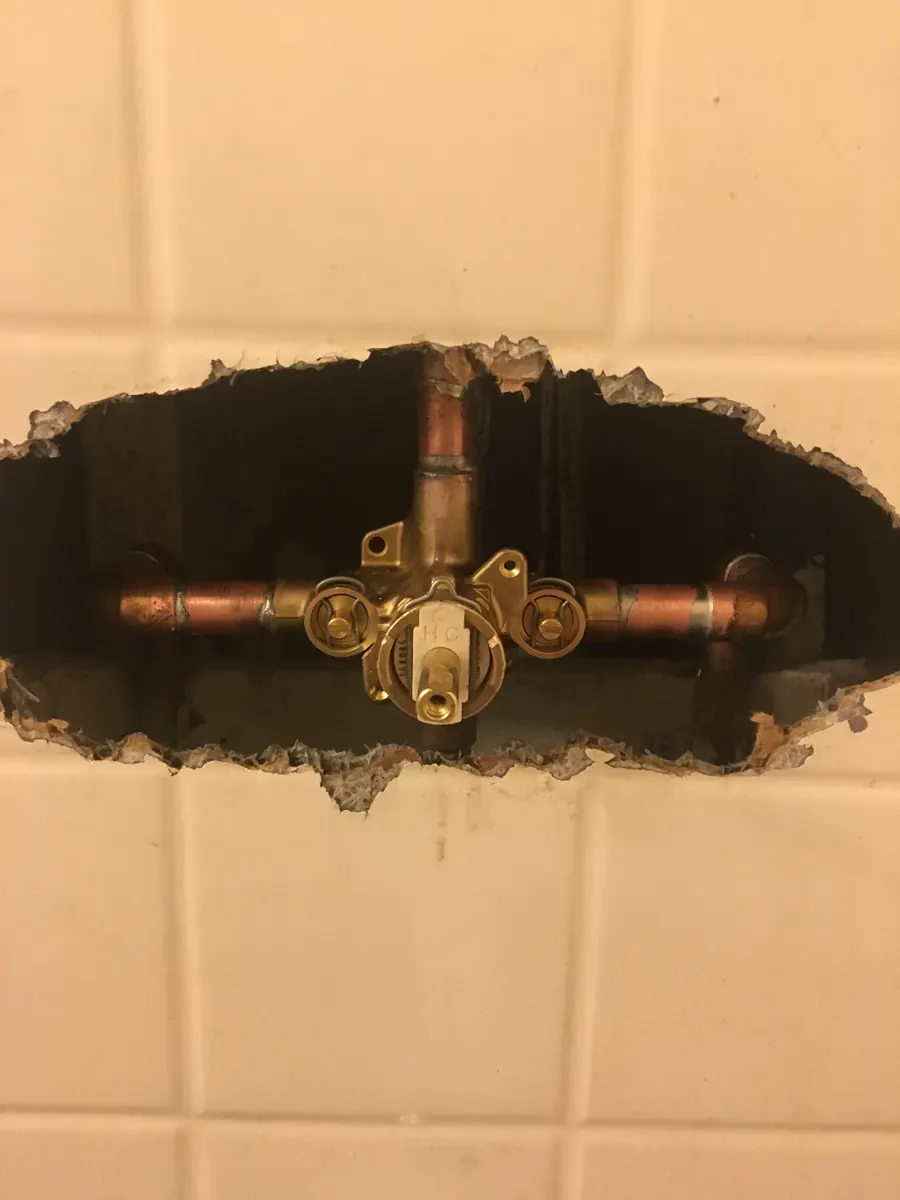
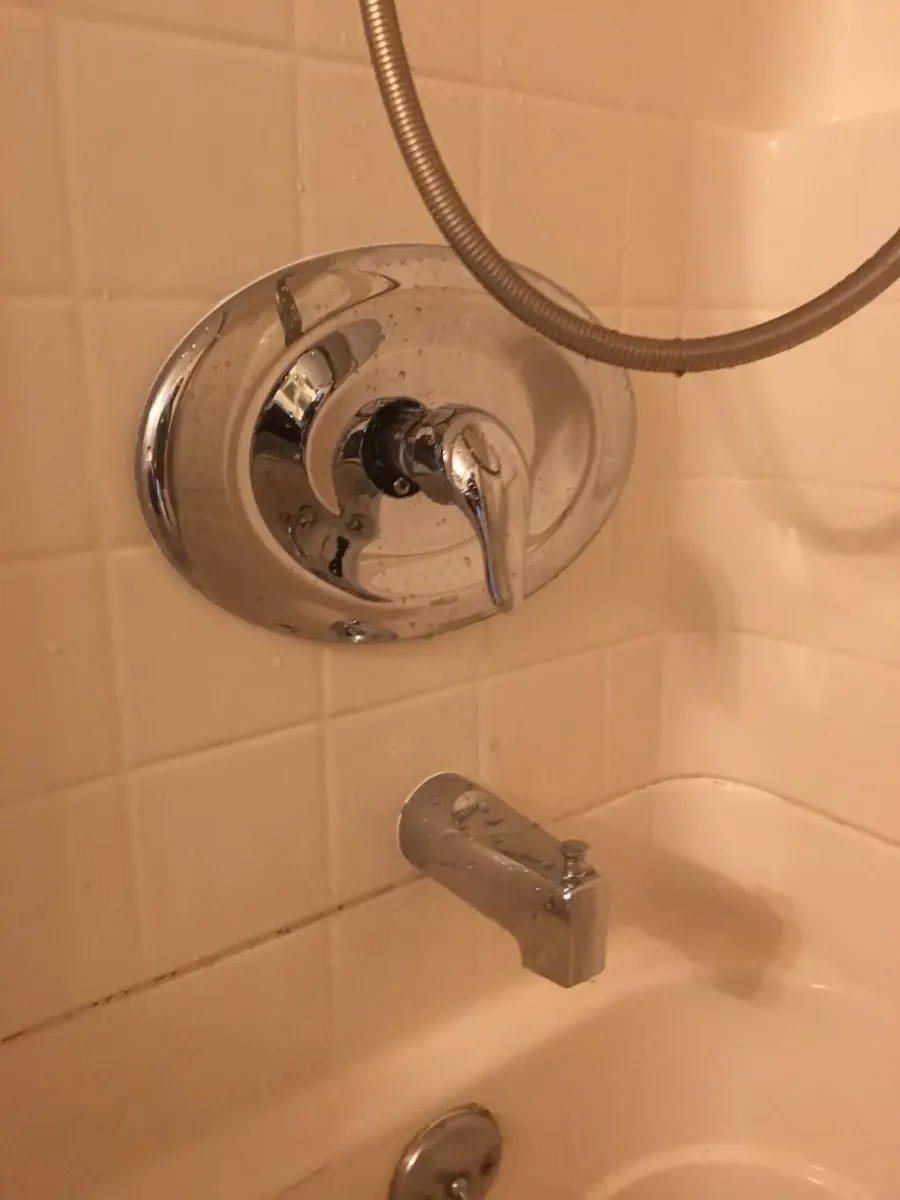
There are two ways in. If the shower backs onto a closet or a bedroom wall, the valve can sometimes be reached from behind through an access panel, which leaves the tile alone. Otherwise an opening is cut in the tile around the old valve, just big enough to work through. Angel cuts the old valve out, sets the new valve body at the depth its trim calls for, connects it to the hot and cold lines and checks for leaks before anything gets closed up.
Plan for covering the opening from the start. A wide trim plate, like the oval one above, hides a modest opening. A bigger hole means patching the tile, so it helps to know whether spare tiles were left over.
Plumbing code calls for anti-scald protection on shower valves, so a new valve will be a pressure-balancing or thermostatic type. A pressure-balancing valve is what stops the shower from turning scalding when someone flushes a toilet and steals the cold water.
Replace a shower handle or change out the trim
A handle that's cracked, loose or just dated can usually be changed without touching the valve. The catch is that handles and trim are made for a specific valve, so a universal handle from the hardware store often fits poorly or not at all.
- Handle spins, water doesn't change
- The splines inside the handle, or on the cartridge stem, have worn smooth. A new handle fixes a worn handle; a worn stem means a new cartridge as well.
- Handle is loose or wobbles
- A set screw under a cap or on the underside of the handle has backed out. If it won't stay tight, the threads are stripped and the handle needs replacing.
- Old shower handle, new look
- Most manufacturers sell trim kits made for their own valves, so you can change the handle and plate to a new finish or shape without opening the wall.
- Two or three handles
- Older showers with separate hot and cold handles use stems and washers instead of a cartridge. Stems can often be replaced, or you can switch to a single-handle valve.
Toilet installation and replacement
Setting a new toilet is mostly about the floor. A toilet that rocks or seeps at the base slowly damages the subfloor, so the seal and flange matter as much as the toilet.
Before you buy one, measure the rough-in: the distance from the finished wall behind the toilet to the center of the bolts at its base. Most homes are 12 inches, but some older bathrooms are 10 or 14. A toilet made for the wrong rough-in either won't fit or leaves an awkward gap at the wall.
A toilet installation covers:
- The old toilet off and the closet flange in the floor inspected. A cracked or loose flange is dealt with before the new toilet goes on.
- New closet bolts and a new wax ring or wax-free seal.
- The bowl set level and solid, so it doesn't rock.
- The tank mounted and a new supply line connected. A stuck shut-off valve is worth replacing while the water is off.
- Test flushes and a check for leaks at the base and under the tank.
A toilet that keeps running or refilling on its own usually needs a new flapper or fill valve inside the tank, not a new toilet.
Kitchen and bathroom faucet installation
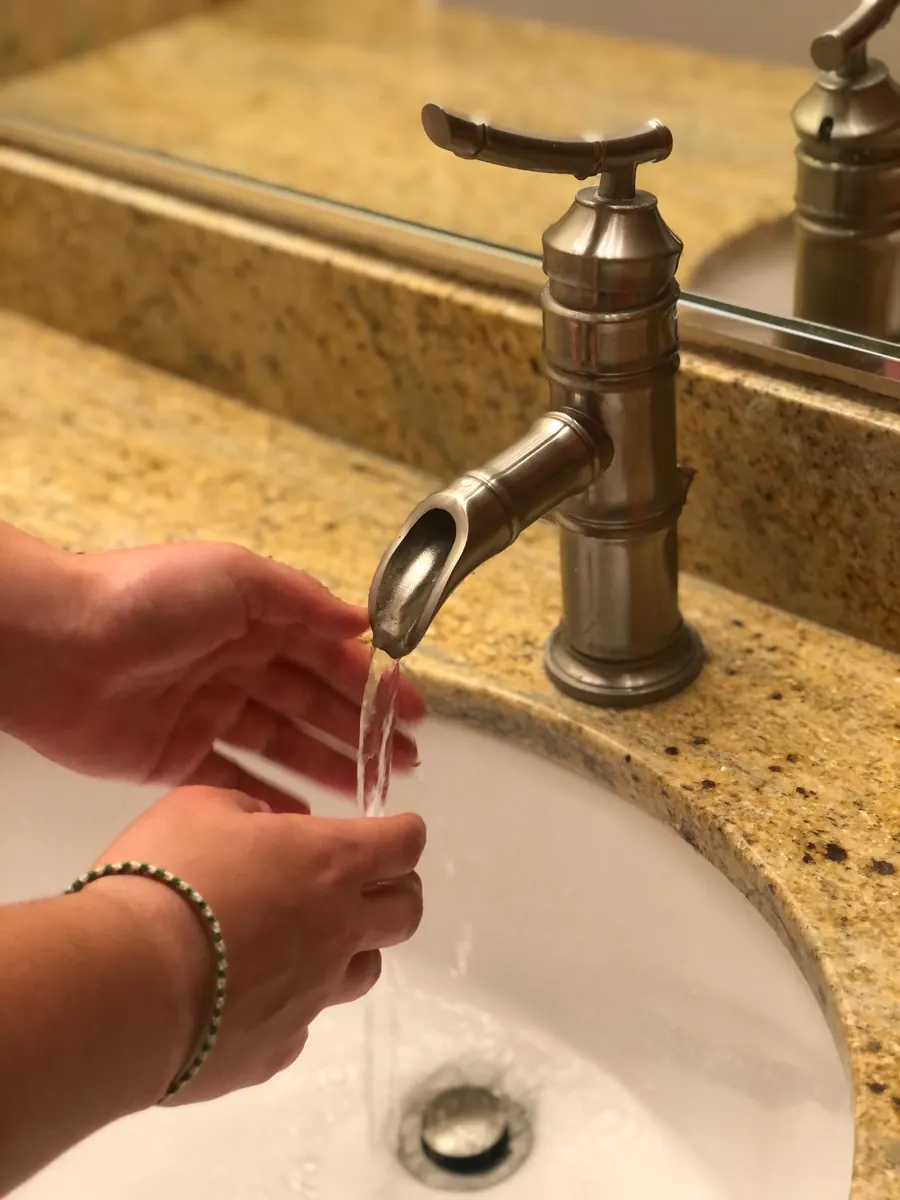
Check the holes in your sink or counter before you buy. Single-hole, centerset (three holes 4 inches apart) and widespread (three holes 8 inches apart or more) faucets aren't interchangeable, unless the new faucet comes with a deck plate to cover the extra holes.
A kitchen faucet installation usually means a pull-down sprayer with a weighted hose under the sink. Angel takes out the old faucet, cleans the deck, sets the new one, connects new supply lines and checks the shut-offs while he's under there. He installs water filtration systems too. If you'd like filtered water from its own tap, the reverse osmosis page covers that.
Hard water shows at the faucet first: white crust on the spout, and an aerator that clogs and sputters. Soaking the aerator in vinegar clears most of it. A faucet that still drips or leaks at its base has worn internals, and a new cartridge or a new faucet is the fix.
Outdoor hose bibs wear out the same way. One that drips with the handle shut needs a new washer or a new bib, and one that leaks around the handle usually needs its packing nut tightened or the bib replaced. Angel also replaces angle stops, the small shut-off valves under sinks and toilets, along with the supply lines they feed.
Shower, toilet and faucet questions
How do I know which shower cartridge I need?
Cartridges are specific to the brand and model of the valve. Look for a logo on the trim plate or handle, and check any paperwork from when the bathroom was built or remodeled. If there's nothing to go on, the old cartridge has to come out to be matched, which is why a photo of your trim is the best first step.
Can a shower valve be replaced without removing tile?
Sometimes. If the shower wall backs onto a closet or another room, the valve can be reached from behind through an access panel. If it doesn't, an opening is cut in the tile, and a larger trim plate or a tile patch covers it afterward.
What is a toilet rough-in, and why does it matter?
It's the distance from the finished wall to the center of the bolts that hold the toilet to the floor. Most are 12 inches, with 10 or 14 inches in some older homes. A toilet made for your rough-in is what lets it sit properly against the wall.
Why does my shower turn hot when someone flushes the toilet?
The flush pulls cold water away from the shower, so the mix suddenly runs hot. Older valves without pressure balancing can't correct for it. A pressure-balancing valve fixes that, and on a shower that already has one, a balancing spool stuck with scale is the likely cause.