Why San Diego water heaters need flushing
Most of the region's water is piped in from the Colorado River and Northern California, and it arrives carrying plenty of dissolved calcium and magnesium. Heat pulls those minerals out of the water. In a tank they settle to the bottom as sediment, sandy at first and harder and crustier with every year it's left alone.
That layer is behind most of the complaints people put down to an old heater:
- Rumbling and popping. Water trapped under the sediment boils in little bursts each time the burner fires.
- Slower heating. Sediment sits between the flame and the water like a blanket, so every cycle takes longer and uses more energy.
- A stressed tank bottom. On gas units, the steel under the crust runs hotter than it was designed to, which wears on the tank and its glass lining.
- Buried elements. On electric units, the lower heating element can end up sitting in sediment and fail early.
- A clogged drain valve. The longer it builds, the harder it is to push through a small valve, which makes the next flush harder too.
What a water heater service visit covers
Angel's maintenance visit is built around the two jobs that do the most good.
- Tank flush
- The tank is drained, then fresh water is run through it in bursts to stir up the sediment and carry it out until the water comes out clear. Once a year is the recommendation for gas and electric tanks alike.
- Burner cleaning
- On gas units five years or older. Garage air carries dust and lint, and it settles around the burner and the opening it breathes through. A clean burner gives a steady blue flame and heats the tank the way it was designed to.
- A second pair of eyes
- If something else needs attention, like a corroded connector or a relief valve that's weeping, Angel will show you and tell you honestly whether it can wait.
The cost of water heater maintenance depends on the heater in front of him: how much sediment has built up, whether the drain valve cooperates, whether the burner needs cleaning, and how easy the heater is to reach. Ask for a quote when you book. Estimates are free.
How a water heater flush is done
This is the standard sequence on a tank heater, whether Angel does it or you do.
- Turn off the heat. Set a gas control to Off or Pilot, or switch off an electric heater's breaker. An electric element that powers on in an empty tank burns out almost at once.
- Close the cold supply and, if you can, give the water a few hours to cool. Tank water is hot enough to scald.
- Connect a garden hose to the drain valve and run it outside or to a floor drain. Open a hot tap in the house so air can get in and the tank drains freely.
- Open the drain valve and let the tank empty. Cloudy or gritty water at first is normal.
- Flush in bursts. With the drain still open, turn the cold supply on and off a few times. Each rush of water churns the bottom and carries sediment out. Keep going until it runs clear.
- Refill. Close the drain, open the cold supply, and leave that hot tap running until the water flows smoothly with no sputtering. Now the tank is full.
- Restore the heat by relighting or resetting the gas control, or switching the breaker back on. Check the drain valve for drips once the tank is hot.
Plastic drain valves turn brittle with age. On a heater that's eight years or older and has never been flushed, the valve can crack, clog or refuse to close once you open it. If yours barely trickles when opened, that's a good one to hand off.
Gas, electric, hybrid and tankless water heater maintenance
| Heater | Every year | Also worth knowing |
|---|---|---|
| Gas tank | Flush | Burner cleaning once it's five or more years old; keep the base clear so it gets combustion air |
| Electric tank | Flush | No burner, but the lower element sits right in the sediment |
| Hybrid heat pump | Flush | Rinse the air filter and keep the condensate line draining |
| Tankless | Descale | Scale builds inside the heat exchanger instead of on a tank floor; see tankless maintenance and descaling |
Hot water heater checks you can do between visits
These are general homeowner habits, not a substitute for the yearly service, but they catch problems while they're small.
- Look at the base and the fittings every few months. Moisture, white crust or rust streaks are the early signs of a leak. If you find water, the leaking water heater guide walks through what each spot means.
- Test the relief valve once a year. Put a bucket under the discharge pipe, lift the valve's lever for a couple of seconds, and let it snap back. Hot water should rush out, then stop. If nothing comes out, or it keeps dripping afterward, the valve needs replacing. A valve that hasn't moved in a decade may not reseat, so be ready to call.
- Keep the temperature around 120°F. It's the commonly recommended setting for scald safety, and lower temperatures drop fewer minerals out of the water.
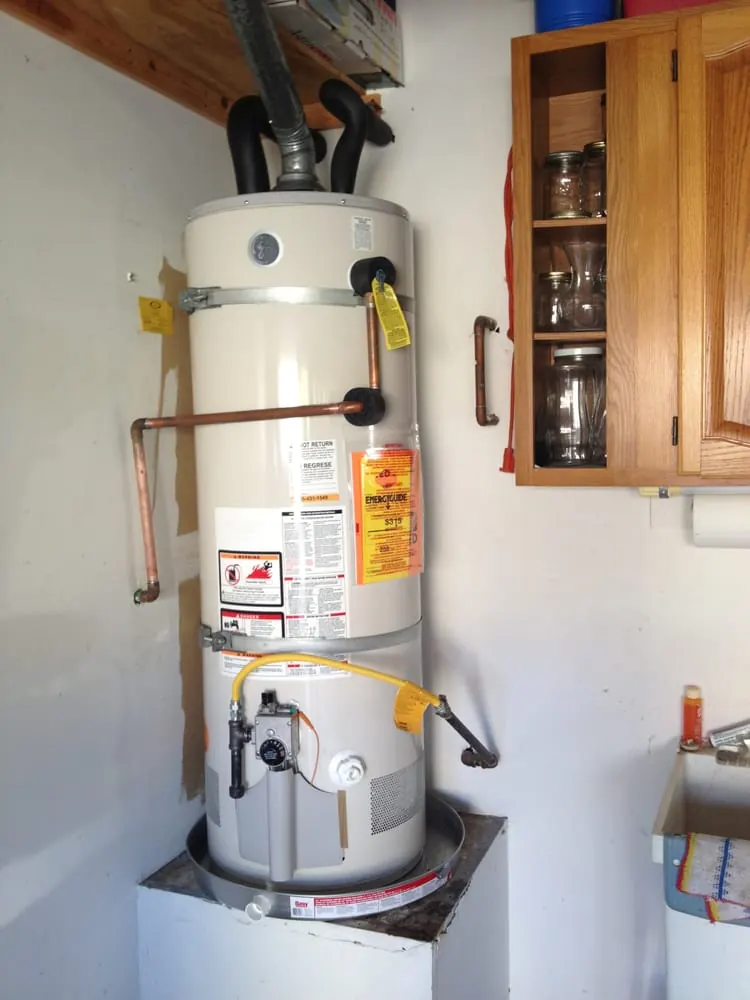
- Give a gas heater breathing room. Don't stack boxes against it or keep paint, gasoline or solvents nearby. It draws air from around its base, which is also why many garage gas heaters sit up on a platform like the one in the photo above.
- Listen when it fires. New rumbling or popping usually means sediment is building, so it's time for a flush.
Most tanks also have an anode rod inside, a sacrificial metal rod that corrodes so the steel doesn't. Hard water and heat use it up over the years, and once it's gone the tank starts to rust from the inside out. It's one more reason a tank's age matters as much as how well it's running today.
Water heater maintenance questions
How often should I flush my water heater?
Once a year, and with San Diego's hard water that schedule is worth keeping. If the heater starts rumbling or running short on hot water before the year is up, sediment may be building faster than usual. Your heater's manual may also list its own interval.
Is it too late to flush a water heater that has never been flushed?
Not always, but go carefully. After many years, sediment can harden into a crust that a flush won't move, and disturbing it can clog the drain valve or expose a weak spot in the tank. On an older heater, the first flush is best done by someone ready to replace the drain valve if it fails.
Does an electric water heater need maintenance too?
Yes. There's no burner to clean, but an electric tank collects the same sediment as a gas one, and its lower heating element sits right in it. A yearly flush helps that element last and keeps the tank's full capacity available.
Can regular maintenance make a water heater last longer?
It helps. Flushing keeps sediment from overheating the bottom of the tank, and a clean burner keeps a gas unit heating efficiently. Maintenance can't stop a tank from aging, but a heater that's looked after tends to reach the long end of its expected life rather than the short end.
What temperature should a water heater be set to?
Around 120°F suits most homes. It's hot enough for showers and dishes, lowers the risk of scalds, and slows mineral buildup. Many gas controls show words or letters instead of degrees, so run the hot tap nearest the heater for a minute and check it with a kitchen thermometer.