Signs your house needs a repipe
One leak is bad luck. A repipe is about patterns. If two or more of these sound familiar, it's worth looking at the whole system instead of waiting for the next leak.
- Repeated pinhole leaks. Small leaks in copper that show up in different spots over a year or two. Each repair holds, and then another one appears somewhere else.
- Galvanized pipe. Dull gray steel with threaded joints, common in homes built roughly through the 1960s. It corrodes from the inside, so the damage you can see is the small part.
- Rusty or brown water. Especially first thing in the morning or after a trip, when water has been sitting in the pipe. If it clears after a minute of running, the pipe is the likely source.
- Low pressure everywhere. Every faucet and shower is weak, not just one, and the pressure regulator checks out. Rust and scale inside old pipe narrow the opening until less water gets through.
- Gray plastic polybutylene. Installed in many homes from the late 1970s into the mid-1990s, and known for failing at its fittings with little warning.
- Corrosion at the joints. Green crust on copper fittings, or heavy rust where galvanized pipe meets a valve.
San Diego's houses span every era, so all of these turn up here: galvanized lines in older pre-1960s neighborhoods, copper in 1970s and 1980s tracts that is now decades old, and polybutylene in some homes from the years it was popular. If you're not sure what's in your walls, the pipe at the water heater or where the main line enters the house usually tells you.
Repair the leak again, or repipe?
Not every leak means a repipe. This is how the decision usually breaks down.
| Your situation | What usually makes sense |
|---|---|
| First leak in otherwise healthy copper | Repair it. One pinhole or failed fitting doesn't condemn the whole system. |
| Third or fourth leak in a few years, in different places | Get a repipe estimate before the next repair. The pattern usually continues. |
| Galvanized lines with low flow or brown water | A repair fixes one joint while the rest keeps corroding. Replacing the pipe fixes the cause. |
| Polybutylene that hasn't leaked yet | Not urgent, but plan for it, especially before a remodel or a sale. |
| Remodeling a kitchen or bathroom | Replace the pipe in that area while the walls are open, then decide on the rest. |
| Trouble in one run only, such as the line to one bathroom | A partial repipe of that section may be all you need. |
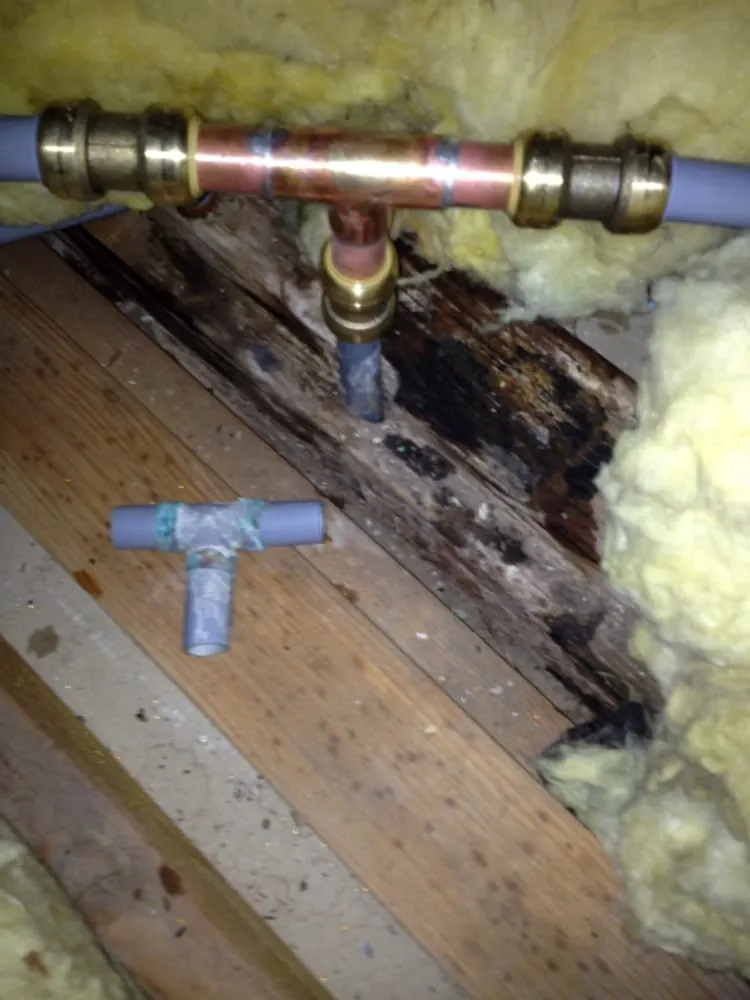
What a repipe involves
Every house is different, but the work follows the same general shape. Many San Diego homes sit on a concrete slab, so new supply lines are commonly routed overhead through the attic and down inside the walls rather than under the floor.
- Walk-through and free estimate. Angel looks at the existing pipe, counts the fixtures, works out the route for the new lines, and goes over materials, access and patching with you.
- Protecting the house. Floors and furniture in the work areas get covered, and a clear path is set up to the attic access and the rooms being worked on.
- Opening access points. Small, planned openings in drywall where the new pipe has to reach a fixture or pass through a wall. The goal is the fewest openings that get the job done, not whole walls torn out.
- Running the new lines. New hot and cold lines from the main to each fixture, supported and protected where they pass through framing.
- Connecting every fixture. Sinks, toilets, tub and shower valves, the washer box, the water heater and the outdoor hose bibs all get tied into the new system. The shut-off valves at each fixture are a natural thing to replace at the same time.
- Testing. The new pipe is pressure-tested and flushed, and every connection is checked for leaks before any wall is closed.
- Retiring the old pipe. Old lines are disconnected and capped. Pipe buried in the slab or deep in a finished wall usually stays where it is, since pulling it out would mean far more demolition.
Planning a repipe in San Diego: access, drywall and living at home
Most of the planning is about the house, not the plumbing. Settling these on the estimate keeps the work moving once it starts.
- Access
- Clear the attic hatch, the cabinets under sinks and any closets on plumbing walls. Furniture against walls with pipe in them needs a few feet of room.
- Drywall patching
- Access openings need patching, texture and paint afterward. Who handles that, and to what finish, is discussed on the estimate, so you know what the walls will look like when the plumbing is done.
- Water shut-offs
- The water has to be off while the old system is disconnected and the new one tied in. The estimate lays out when that happens, so you can plan showers, laundry and work-from-home days around it.
- Living at home
- Many families stay in the house during a repipe. Expect noise, some dust in the rooms being worked on, and a room or two that's off limits for a while. Keep pets and kids clear of open walls and the attic hatch.
- Pipe material
- There's more than one sound choice for repiping. Which one goes into your house is decided on the estimate, based on the house, the route and what you want.
With the water off and the system open, it's a good moment to look at what connects to it: the shut-off valve above the water heater, the pressure regulator on the main line, and the expansion tank. If the heater itself is near the end of its life, a water heater replacement can be planned around the same work.
Repipe questions
How can I tell if my house has galvanized pipes?
Find a spot where the pipe is exposed, such as at the water heater, under a sink or where the main line enters the house. Galvanized steel is dull gray with threaded joints, and a magnet sticks to it. Copper is reddish-brown and a magnet won't stick.
Do I have to repipe the whole house?
Not always. If the trouble is in one area, such as the line to one bathroom, a partial repipe can make sense. If the pipe is the same age and material throughout and leaks keep turning up in different places, replacing only part of it usually just moves the next leak to the part you kept.
Will a repipe fix low water pressure?
If the low pressure comes from old galvanized pipe that has narrowed inside, yes. If the cause is a failing pressure regulator, a partly closed main valve or a clogged fixture, new pipe won't help, so those get checked first. A pressure gauge on a hose bib is the quickest way to start sorting it out.
Is polybutylene pipe a reason to repipe even if it isn't leaking?
Many homeowners decide it is, because polybutylene tends to fail suddenly, often at a fitting, rather than slowly. Buyers and home inspectors also tend to flag it. There's no need to panic, but it's worth planning a repipe rather than waiting for the leak to decide for you.
What happens to the old pipes after a repipe?
They're disconnected from the water supply and capped so they can't carry water. Sections that are easy to reach may come out. Pipe buried in the slab or deep inside finished walls is usually left in place, since removing it would mean much more demolition and patching.