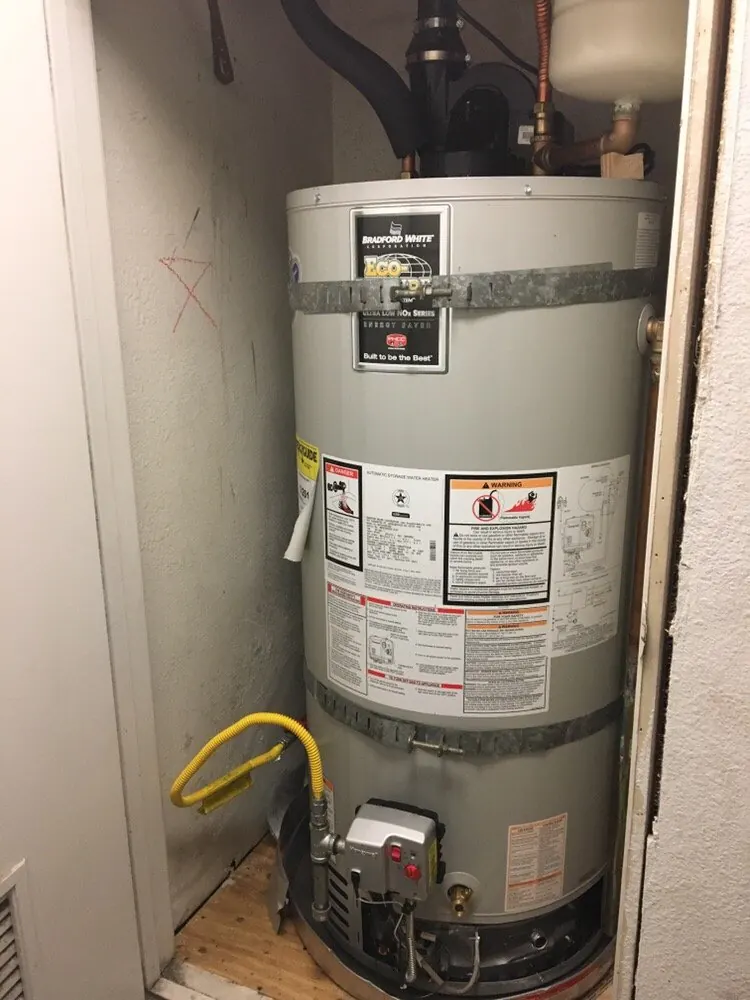
Atmospheric vent vs power vent gas water heaters
Every gas water heater makes exhaust, and the vent is how it leaves the house. The type of vent you have now usually decides what goes in next.
| What differs | Atmospheric (natural draft) | Power vent |
|---|---|---|
| How exhaust leaves | Hot exhaust rises on its own through a metal flue, usually up through the roof | A fan on top pushes it through plastic pipe, often out a side wall |
| Needs electricity | No | Yes, an outlet within reach of its cord |
| In a power outage | Most standard models keep heating | No new hot water until the power is back |
| Sound | Quiet | A fan hum while the burner runs |
| Where it fits | Anywhere a flue can rise straight up | Spots where a vertical flue can't run, such as interior rooms and remodels |
| Up-front price | Usually the lower one | Usually higher, for the fan and controls |
A lot of San Diego garages have atmospheric heaters with a metal flue going straight up, and replacing like for like keeps the job simple. Switching from one type to the other means new vent pipe, and a power vent also needs that outlet. If the existing flue is rusted, loose or sloped the wrong way, Angel will point it out on the estimate, because a vent that spills exhaust into a garage or closet is a carbon monoxide risk.
The water heater gas line and connector
Between your gas pipe and the heater sit two parts: a shutoff valve and a flexible connector, usually the yellow-coated line you see in photos. Both are new with every gas install.
- The connector. Flex connectors are made to be bent into place once. An old one that's been moved, kinked or corroded is a common source of slow gas leaks.
- The valve. A shutoff that hasn't been turned in a decade can stick or seep. A new one means you can actually shut the gas off when you need to.
- The sediment trap. Code calls for a short capped pipe below the gas inlet that catches grit and moisture before they reach the heater's controls.
The gas line itself also has to be big enough. It feeds every gas appliance in the house at once. A standard 40 or 50-gallon tank usually burns somewhere around 35,000 to 40,000 BTU an hour; many 75-gallon tanks run close to double that, and a tankless unit can need several times as much. If you're stepping up in size, Angel checks the pipe from the meter before you commit to a heater.
A rotten-egg smell near the heater means gas. Don't relight the pilot or touch light switches. Get everyone out first, then call SDG&E or 911 once you're outside. Gas work at the heater, even a new connector, is a job for a licensed plumber.
40, 50 or 75-gallon gas water heater
The size follows the house. The full sizing guide is on the water heater replacement page; here's how each size plays out for gas in particular.
Most homes
Up to about 1,600 sq ft. Usually the easiest swap, because the vent, gas line and platform were often built for this size.
Larger homes
Over about 1,600 sq ft. Often the same burner size as a 40, so the gas line rarely changes. The bigger tank has to fit the space.
Big demand
Large homes, soaking tubs, several showers at once. A bigger burner often means a larger vent and a gas line check.
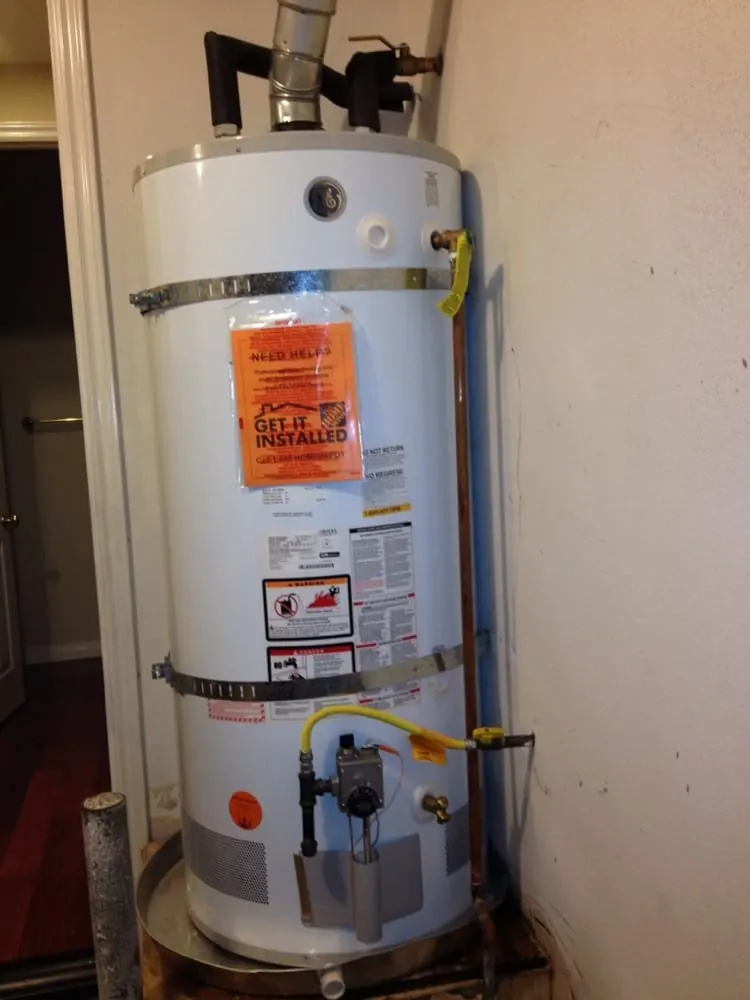
Garage, closet or outdoor closet: where gas heaters go
The spot changes what the install needs, mostly because a burner needs air and its exhaust needs a way out.
- Garage
- The usual spot in North County tract homes. Gas heaters in garages often sit up on a platform, keeping the burner above the floor where gasoline vapors settle, and newer tanks are built to resist igniting those vapors. Where a car could bump the heater, it needs protection.
- Indoor closet
- A gas heater in a hall or laundry closet needs enough combustion air to burn cleanly, which usually means a louvered door or vents to another space. Keep paint, cleaners and boxes out of that closet.
- Outdoor closet
- Common on older homes and some condos. Air isn't the problem here; weather is. Doors, floors and vent caps take a beating, and coastal air rusts metal parts faster.
- Attic or interior room
- Less common in San Diego. These spots usually call for a power vent or careful flue routing, a pan with a drain line, and a plan for getting the tank in and out.
Gas water heater replacement cost: the gas-specific parts
On top of the usual factors, a few things only affect gas units. A vent that has to change type or size. A gas line that's too small for a bigger burner. A closet that needs better combustion air. And for a power vent, an outlet near the heater. A like-for-like gas swap avoids all four. The replacement page lists what every install includes, and the price comes from a free estimate, not a guess over the phone.
Gas water heater repair and maintenance
Not every problem means a new tank. On gas heaters, most repairs come down to the pilot and its sensor, the gas control valve, or the burner. The water heater repair page walks through each one, and when a repair stops making sense.
Upkeep on a gas tank is a yearly flush to clear sediment, plus a burner cleaning once the heater is five years or older. Garages are dusty, and lint from a nearby dryer clogs the air intake at the bottom of the heater. Details are on the maintenance page. Water under the tank is a different story; start with what a leaking water heater means. And if your home has a pressure regulator or check valve on the main line, the heater also needs an expansion tank.
Gas water heater questions
Will a power vent water heater work without electricity?
No. The fan has to run before the burner will light, so without electricity the heater can't make new hot water, though the tank stays hot for a while. Most standard atmospheric models with a standing pilot don't need power and keep heating.
Can a gas water heater go in a bedroom or bathroom closet?
Not a standard one. Code keeps fuel-burning heaters that draw air from the room out of bedrooms, bathrooms and closets that open into them, because of the carbon monoxide risk. A sealed direct-vent model that takes all its air from outside is the usual exception.
Will my existing gas line handle a 75-gallon water heater?
Sometimes. A 75-gallon tank often burns close to twice the gas of a 40-gallon, and the line has to feed that plus your furnace, range and dryer at the same time. Whether yours is big enough depends on the pipe size and how far it runs from the meter.
Why does a new gas water heater sizzle when it starts?
On a cold start, moisture in the exhaust condenses inside the cool flue and drips onto the burner, which sizzles. It's normal and fades as the tank warms up. Sizzling that never stops, or water collecting under the heater, is worth a call.
Can I switch from a gas water heater to electric?
Yes, if there's a 240-volt circuit at the spot or one can be added. A standard electric tank recovers more slowly than gas, while a heat pump hybrid uses far less electricity but needs room and air around it.