How under-sink reverse osmosis works
Reverse osmosis pushes water through a membrane so fine that dissolved minerals and most other impurities can't follow. Your home's own water pressure does the pushing, so a basic system has no pump. The water passes through several stages on its way to the faucet.
- Sediment prefilter
- Catches sand, rust flakes and grit so they don't clog the stages after it.
- Carbon prefilter
- Takes out the chlorine or chloramine utilities use to disinfect tap water, which is where the pool smell comes from. It also protects the membrane, which chlorine would damage.
- RO membrane
- The heart of the system. Clean water passes through, while the minerals and other dissolved solids it holds back are rinsed away to the drain.
- Storage tank
- A membrane makes water slowly, drop by drop, so a small pressurized tank holds a ready supply. A valve shuts production off when the tank is full.
- Post filter
- A last carbon stage that polishes the taste on the way to the tap. Some systems add a remineralizing stage here as well.
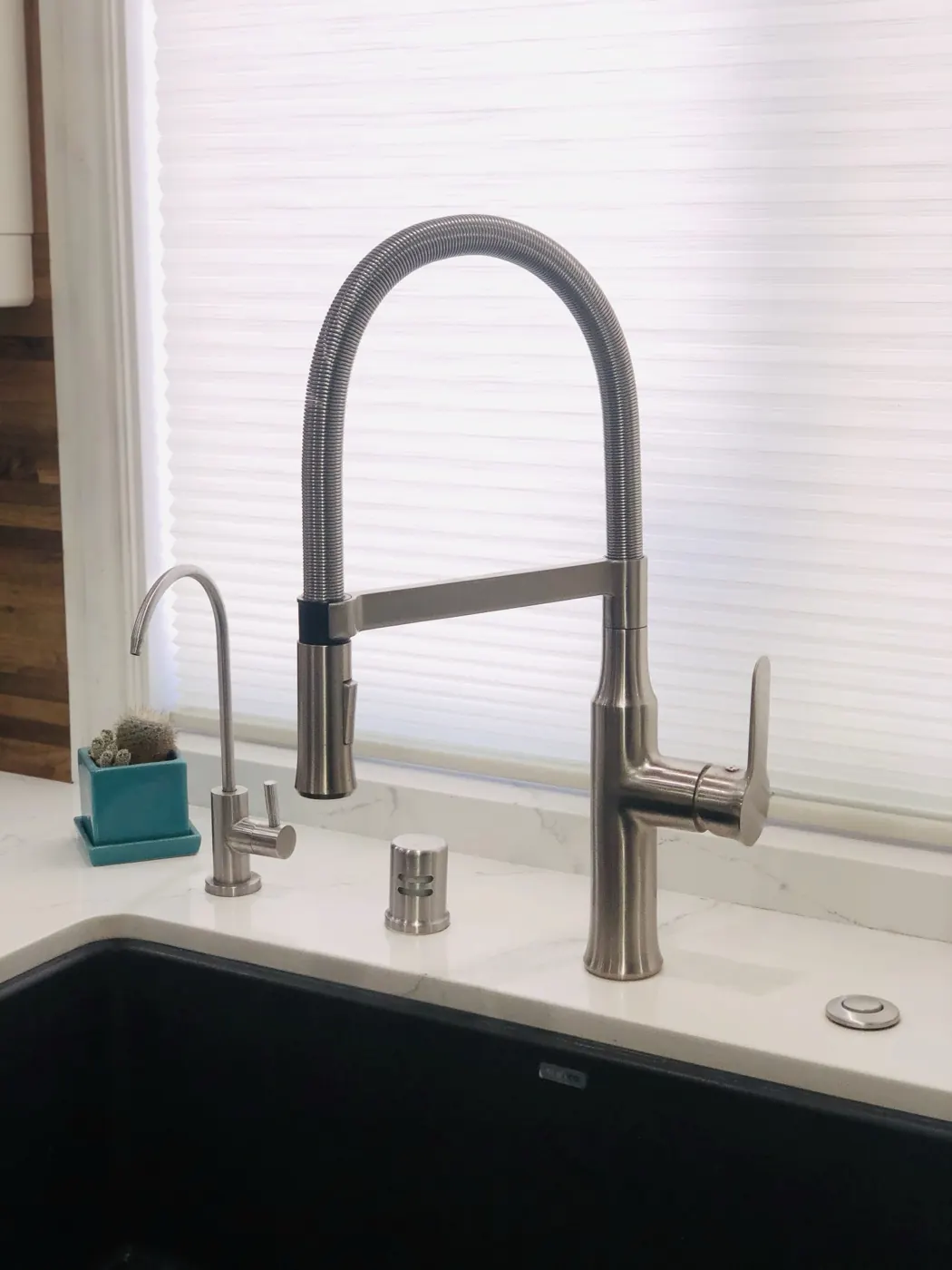
- Dedicated faucet
- A separate, slim faucet at the sink that runs only RO water. Your main kitchen faucet keeps working as it always has.
San Diego tap water and what RO changes
Much of San Diego's water is imported from the Colorado River, and it picks up a lot of dissolved minerals along the way. That's why kettles build up a white crust, glasses come out of the dishwasher spotted, and tankless water heaters here need regular descaling.
At the one tap it serves, an RO system takes most of those dissolved minerals out, along with the disinfectant taste. People notice it most in coffee, tea, ice and a plain glass of water. Some find RO water a little flat at first, because minerals are part of what gives water its taste.
An under-sink system treats the water at one faucet, plus the fridge if you connect it. Showers, the washing machine and the water heater still get regular tap water. Scale inside a water heater is a maintenance job, not something RO fixes.
What RO system installation involves
An RO install touches a handful of things under and around your sink. Knowing them ahead of time tells you whether your kitchen is a simple job or needs a little more planning.
- A hole for the faucet. Many sinks have a spare hole from an old sprayer or soap dispenser that works. If not, a new hole goes through the sink deck or the countertop. Granite and quartz take more care to drill than a stainless sink.
- A cold-water tee. A fitting at the cold shut-off valve under the sink splits off a small line to feed the system.
- A drain saddle. A clamp on the sink drain pipe, above the trap, with a hole for the RO drain line. It goes where waste from a garbage disposal can't back into the line.
- The unit and the tank. The filter housings usually mount on the cabinet wall, and the tank stands on the cabinet floor. Tubing connects them to the feed, the drain and the faucet.
- Start-up. The system is flushed following the manufacturer's directions, which often means draining the first tank or two, and every connection is checked for drips.
Is there room under your sink?
A garbage disposal, dishwasher hookups, a trash pullout and cleaning supplies all compete with an RO unit for space. The tank is the bulky part. It can often lie on its side or sit in the next cabinet over, as long as the tubing reaches. Empty the cabinet and take a photo; that shows most of what matters.
Adding a line to the fridge or ice maker
A refrigerator with a water dispenser or ice maker can be fed from the RO system with a tubing run along the cabinets. Because the tank delivers water at lower pressure than the house line, the dispenser may run slower than you're used to, and a long run makes that more noticeable. Check the fridge manual too, since some recommend removing or bypassing the built-in filter once RO water feeds it.
Filter and membrane changes
Fresh filters are what keep an RO system working. Intervals depend on the system and how much water you use, so follow your manufacturer's schedule. Typical ranges look like this:
| Part | Typically changed, per the manufacturer | Signs it's overdue |
|---|---|---|
| Sediment prefilter | Every 6 to 12 months | The RO faucet slows down |
| Carbon prefilter | Every 6 to 12 months | A chlorine taste creeps back |
| RO membrane | Every 2 to 3 years, sometimes longer | Water tastes of minerals again, or a TDS meter shows readings climbing |
| Post filter | About once a year | A stale or flat taste |
Hard water works a membrane harder, so in San Diego it pays to stay on the early side of the schedule. A strip of tape on each housing with the date you changed it saves guessing later.
The membrane needs pressure to work. Below roughly 40 psi, most systems make water slowly and the tank never fills all the way. If a new system seems sluggish, check the house pressure first; the water pressure guide explains how.
Reverse osmosis questions
Do I need a separate faucet for a reverse osmosis system?
Usually, yes. RO water comes from a small storage tank at low pressure, so it runs through its own faucet rather than your main kitchen faucet. A few kitchen faucets are built with a separate filtered-water channel, but a dedicated RO faucet is the common setup.
Why does my RO system send water down the drain?
That's how reverse osmosis works. The membrane splits the water into clean water and a rinse stream carrying the minerals it rejected, and that rinse has to go somewhere. Newer systems waste less than older ones, and production stops when the storage tank is full.
Why is my RO faucet so slow?
A trickle usually means the storage tank is low, the prefilters are clogged, or the house pressure is too low for the membrane to keep up. Start with the filters if they're past due. If they're fresh, the tank's air charge and the home's water pressure are the next things to check.
Can an RO system go under a sink with a garbage disposal?
Usually, yes. The main concerns are space and where the drain line connects. The drain saddle goes on the sink drain where disposal waste can't back into the RO line, and in a crowded cabinet the tank can often move to one side or into the next cabinet.
Does RO water taste different from tap water?
Most people find it cleaner, without the chlorine note of tap water. Some find it a little flat at first, because the minerals that give water its taste are gone. Systems with a remineralizing stage add a small amount back for a rounder taste.