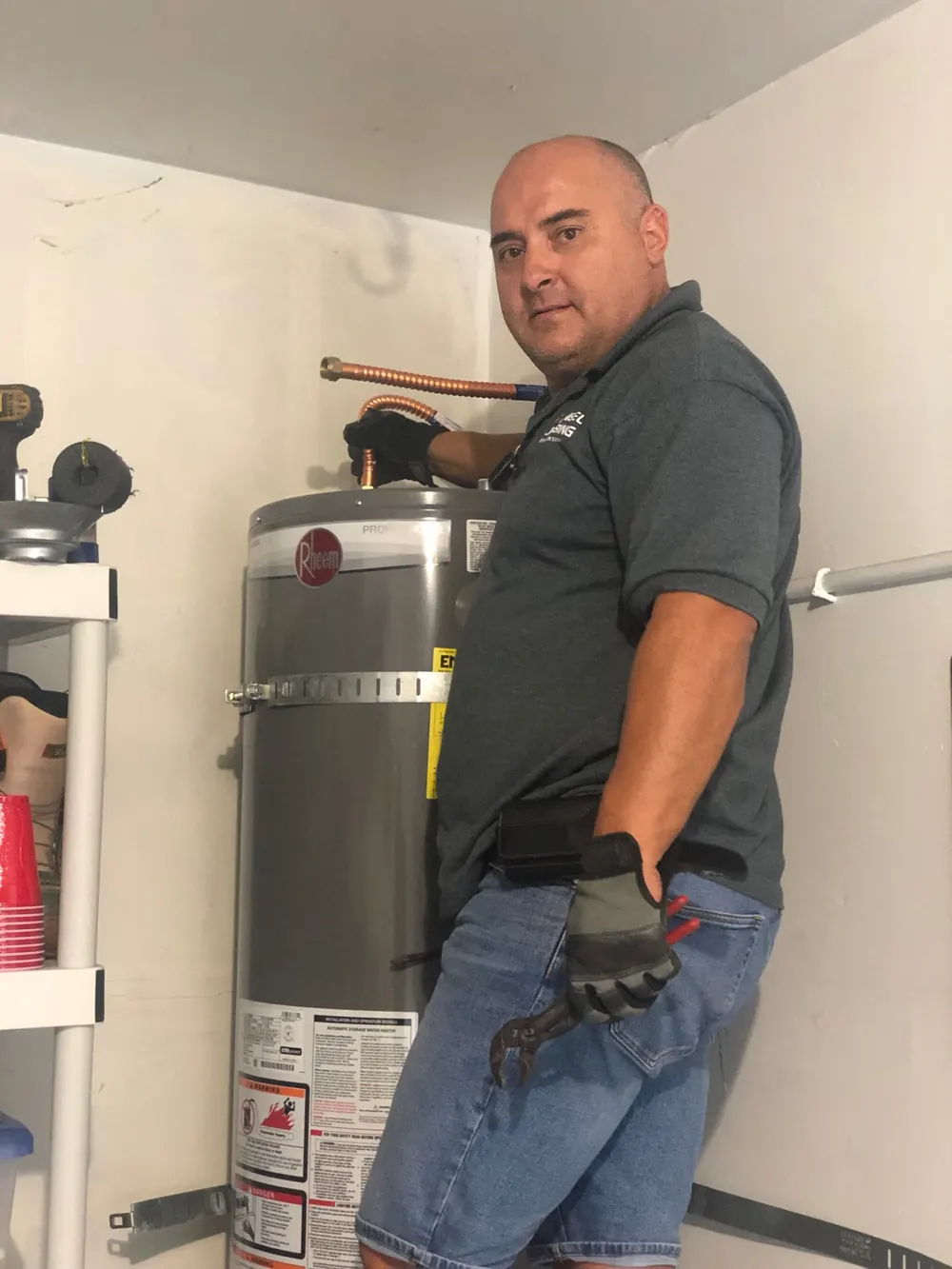
What's wrong with your water heater? Start with the symptom
A water heater only does a few things: it brings in cold water, heats it with a burner or elements, and holds it until you open a tap. So the symptom usually points straight at the part that's failing. This is what Angel checks first for each one.
| What you notice | Most likely cause | Usually |
|---|---|---|
| No hot water, gas heater | Pilot out, a worn thermocouple or flame sensor, or a failed gas control valve | Repairable |
| Pilot lights, then goes out | Thermocouple or flame sensor no longer reading the flame | Repairable |
| No hot water, electric heater | Tripped high-limit reset, a burned-out element or a failed thermostat | Repairable |
| Hot water runs out fast | Sediment filling the bottom of the tank, or a dead lower element on electric units | Often repairable |
| Water dripping on top | A worn hot or cold connector, or a fitting at the relief valve | Repairable |
| Water pooling under the tank | The tank itself has corroded through | Replace |
| Rumbling or popping when it heats | Hardened sediment on the bottom of the tank | Flush, then check |
If yours isn't on the list, don't worry. A text with a photo of the heater and its label is usually enough for Angel to tell you what he'd look at.
Gas water heater repairs
Most homes in San Diego and North County have a gas tank in the garage or a hall closet, and most gas heater calls trace back to the same three areas.
Thermocouple and flame sensor
These small sensors sit in the pilot flame and tell the gas valve it's safe to keep gas flowing. When one wears out, the valve shuts the gas off even though nothing is actually wrong. That's why a pilot will light, burn for a minute and go out again. Replacing the sensor is a common, quick repair.
Gas control valve
The valve on the front of the tank holds the thermostat and controls the burner. If the pilot is fine but the burner never comes on, or the water temperature swings no matter where the dial is set, the valve is the usual suspect. On an older heater, Angel will tell you whether a new valve still makes sense or whether that money is better put toward a new unit.
Burner and pilot assembly
Dust, lint and rust flakes collect around the burner, especially in garages. A dirty burner burns poorly and heats slowly. On gas units five years or older, Angel cleans the burner as part of the service.
Electric water heater repairs
Electric tanks have no flame, so the failures look different. Most have two heating elements, each with its own thermostat.
- No hot water at all usually means the upper element or thermostat has failed, or the high-limit switch has tripped. A reset that keeps tripping is a warning sign, not a fix.
- Lukewarm water that runs out quickly often means the lower element has burned out, so only the top of the tank is heating.
- A tripping breaker can point to a shorted element or a wiring fault at the heater.
Elements and thermostats are standard parts. Angel tests them before replacing anything, so you only pay for what actually failed.
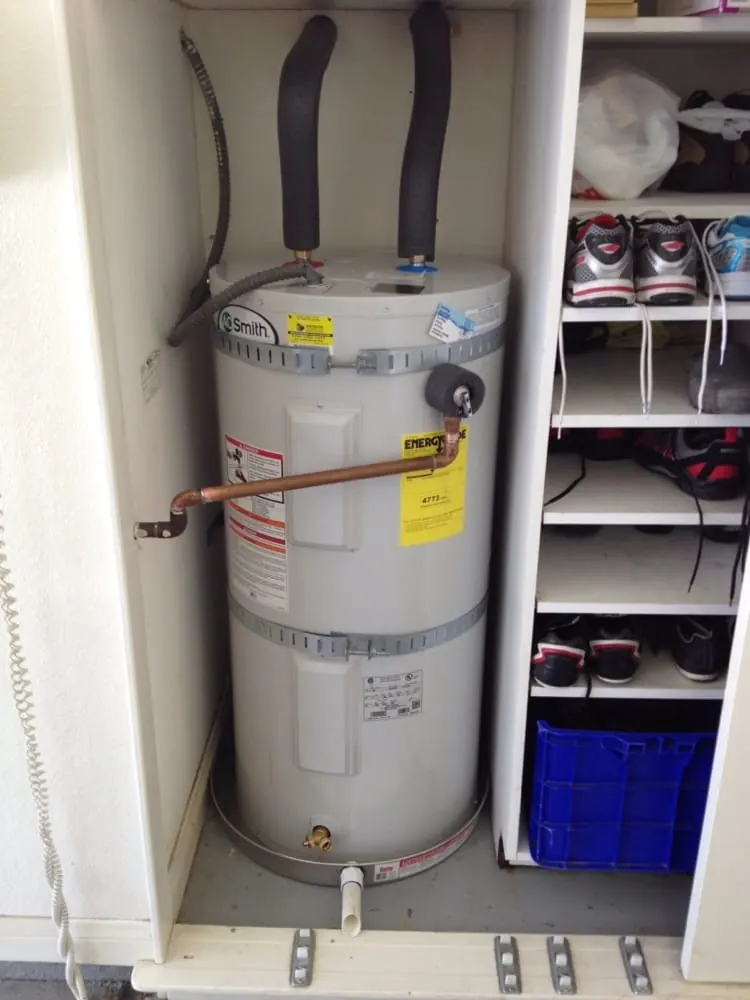
Repair it or replace it?
This is the question behind most calls, and the answer usually comes down to three things.
- Where the water is
- A leak at a connector or fitting on top is a repair. Water coming from the tank body or seeping out underneath means the tank has failed, and no part will fix that. More on this on the leaking water heater page.
- How old the heater is
- Most tank heaters last somewhere around 8 to 12 years, depending on water quality and upkeep. A new thermocouple on a three-year-old heater is an easy yes. A new gas valve on a heater that's 12 years old usually isn't.
- Whether it's under warranty
- Factory warranties run 6 to 12 years. If a covered part fails, the part may be free and you'd only pay for the labor. Angel checks the label before quoting.
When replacing is the better call, Angel will say so and explain why. A standard tank-for-tank water heater replacement takes about 2–3 hours.
Safe things to check before you call
A few checks can save you a visit, or at least make the visit faster.
- Gas heater: look through the small window near the bottom of the tank. If there's no blue pilot flame, the pilot is out. Your heater's label has lighting instructions; if it won't stay lit after following them, the thermocouple or flame sensor is the likely cause.
- Electric heater: check the breaker for the water heater in your electrical panel. If it has tripped, reset it once. If it trips again, leave it off and call.
- Any heater: make sure the cold-water valve above the tank is fully open.
- Find the label: it lists the brand, model, size and serial number. The serial number usually encodes the year the heater was made, which is the fastest way to know its age.
Don't try to light anything or flip switches. Leave the house, then call SDG&E or 911 from outside. Have the gas side checked before anyone relights the heater.
How a repair visit works
You call or text, ideally with a photo of the heater and its label. Angel asks what you're seeing, sets a time, and comes out himself. On site he confirms the cause before replacing anything, then gives you the options: the repair, what it costs, and whether the heater is close enough to the end of its life that replacing makes more sense. You decide. Nothing gets swapped without your okay.
Angel works on tank water heaters from Rheem, A.O. Smith and Bradford White, and the gas and electric models most San Diego homes have. Tankless units have their own failure points. Those are covered on the tankless repair and descaling page.
Water heater repair questions
Why does my water heater pilot light keep going out?
The most common reason is a worn thermocouple or flame sensor. It no longer senses the pilot flame, so the gas valve shuts off as a safety measure. A strong draft near the heater or a dirty pilot assembly can do the same. A new sensor usually fixes it.
How do I find out how old my water heater is?
Look at the label on the side of the tank. Most brands put the manufacture date into the serial number, usually as the year and month. Every brand codes it a little differently, so the easiest way is to text Angel a clear photo of the label.
Is it worth repairing a 10-year-old water heater?
It depends on the part. A small, inexpensive part on an otherwise healthy tank can be worth it. A major part like the gas control valve, or any sign of rust or seepage from the tank, usually tips the math toward replacing, because the tank is near the end of its life either way.
Why is there no hot water but the pilot is still lit?
If the pilot is burning but the main burner never fires, check that the temperature dial isn't on its lowest or vacation setting. If it isn't, the gas control valve is the likely culprit. It controls the burner and can fail even while the pilot keeps burning.
Do you repair tankless water heaters too?
Yes. Tankless units fail differently from tanks, mostly from mineral scale and from ignition or flow problems, and they need yearly descaling. See the tankless repair and descaling page for what's involved.